
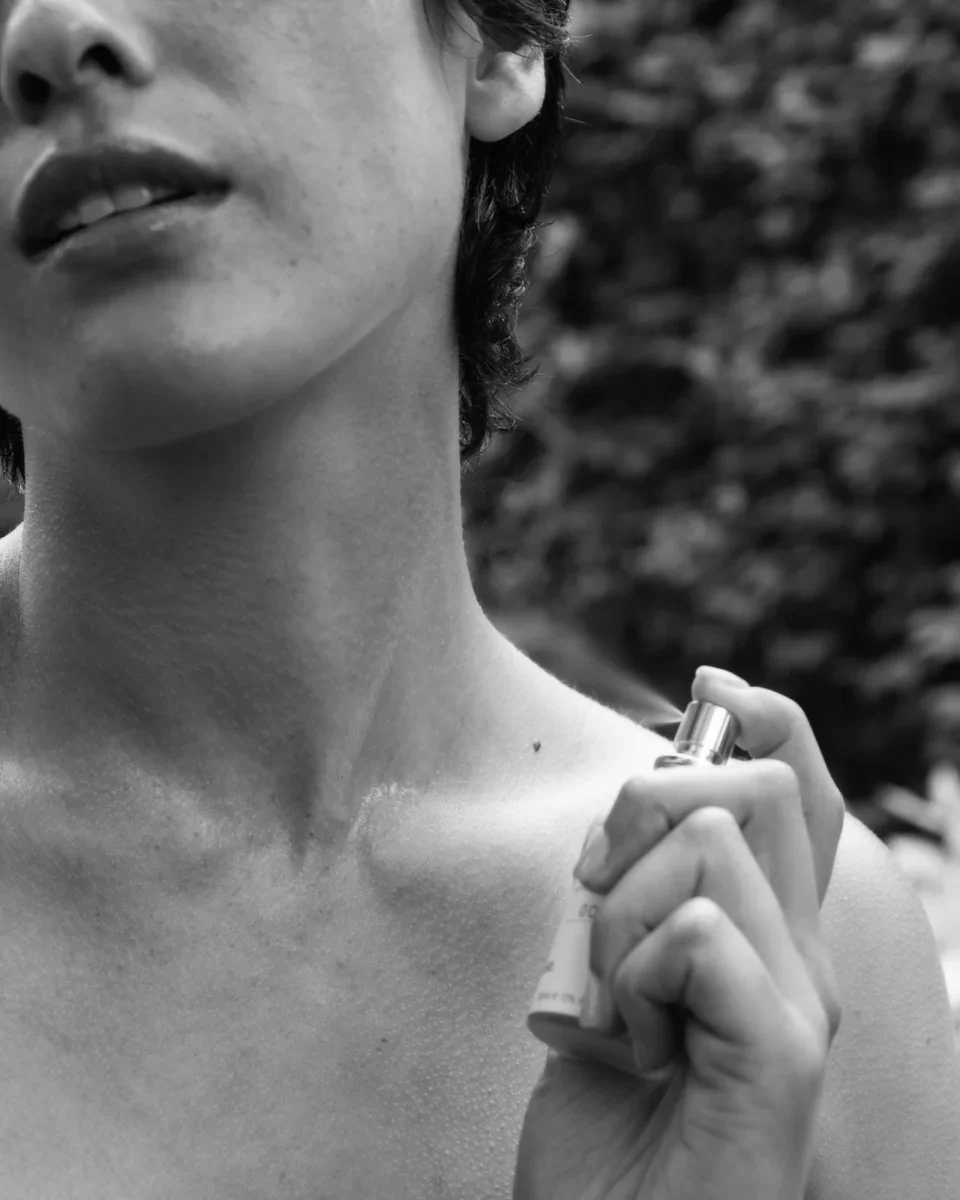
The Complete Guide to Scent Layering & Stacking
The Living Scent
Sometimes called scent stacking, fragrance layering is the practice of applying two or more scents in sequence to create something neither could achieve alone. People have been doing this for thousands of years, across almost every culture on earth. And yet it remains one of the least understood aspects of how we wear fragrance.
The Living Scent traces that history, from the earliest recorded perfumer in 1200 BCE through Vedic gandhashastra, Mughal attar-making, and Japanese kodo, to what modern neuroscience now tells us about how the brain processes scent. It covers the chemistry of how fragrances interact on skin, the critical difference between layering and mixing, and what it means to design a fragrance duo from the ground up.
The guide runs to ten chapters and is fully referenced, citing peer-reviewed research alongside primary historical sources. Where the evidence is robust, we say so. Where it is emerging, we say that too.
It took over a year to research and write. It is free to read
OVERVIEW
CONTENTS
01
Introduction
The invisible signature you already wear
02
Echoes Across Five Thousand Years
How cultures discovered what neuroscience now explains
03
How Scent Works
The chemistry, the brain, and the limits of what we know
04
Layering and Mixing
A critical distinction
05
The Art of Pairing
Fragrance families, shared character, and why some combinations work
06
Alcohol-Based and Water-Based Fragrance
What each does well, and where they differ
07
The Natural Question
Why whole essential oils, and what that means
08
Prem Rouge
A case study in layering by design
09
Practical Techniques
For layering
10
Conclusion
Scent as a daily act of attention
Introduction
The invisible signature you already wear
Every morning, before you choose your words or your clothes, your body is already broadcasting. Human skin emits more than 350 volatile compounds, a molecular signature as individual as a fingerprint. When you layer fragrance, you are not masking that signature. You are composing with it.
Scent layering is the practice of applying two or more fragrances in sequence to create something neither could achieve alone. People have been doing this for thousands of years, across almost every culture on earth. And yet it remains one of the least understood aspects of how we wear fragrance.
Part of the reason is that scent itself is unusual. Of all our senses, smell has the most direct path to the brain's emotional and memory centres. Vision, hearing. and touch are all routed through a processing hub called the thalamus before they reach the parts of the brain that generate feeling. Smell largely bypasses that step. A scent molecule can trigger an emotional response within two to three neural connections. No other sense works with that kind of directness.
This is why a particular fragrance can stop you mid-step with a memory you had not thought about in years. And it is why the fragrances you choose to layer are not simply decorative. They are speaking to the part of your brain that holds your most vivid memories, your sense of comfort, your feeling of being present somewhere specific in time.
Echoes Across Five Thousand Years
How cultures discovered what neuroscience now explains
Long before anyone mapped an olfactory receptor, cultures across the world arrived at the same intuition independently: layering scent upon scent creates something greater than either ingredient alone. What took neuroscience centuries to explain, the nose already knew.
PAUSE. BREATHE. NOTICE
CHAPTERS 03 – 10
Read the full guide
The remaining eight chapters cover the science of scent, the art of pairing, alcohol-free and water-based fragrance, the natural question, practical layering techniques, and Prem Rouge as a case study. Leave your email and we will send you the complete guide.
WHAT IS scent layering
And Why It’s Having a Moment

Scent layering, sometimes called scent stacking, is the practice of wearing two or more fragrances simultaneously, or in sequence, to create a singular, personalised scent that exists nowhere in a bottle. Rather than choosing a single signature fragrance, you compose one.
It is, in essence, perfumery moved into your hands.
The idea is not new. In the Middle East and South Asia, layering attars and ouds has been a sophisticated grooming ritual for centuries – a practice Dilli House draws on directly in its approach to fragrance. What is new is the wider cultural appetite for it. Pinterest named scent stacking a predicted trend for 2026, and search interest in fragrance layering has grown steadily as consumers grow more fluent in the language of scent. People are no longer content to wear what they are sold. They want to compose.
But scent layering done well is quite different from scent layering done casually. Spraying two perfumes in the general direction of your collarbone and hoping for the best rarely produces anything memorable. The guide we have put together exists precisely because the difference between a layered scent that is transcendent and one that is simply muddled often comes down to a handful of principles that are straightforward once you understand them, but not always obvious.
Whether you are new to fragrance layering or an experienced nose looking to refine your practice, what follows is an introduction to those principles.
THE PRINCIPLES
Behind the Practice
Learning how to layer perfume effectively is less about rules and more about developing a nose for proportion, contrast, and sequence. Here, briefly, are the four that matter most.
Structure Before Impulse
Every lasting layered scent has something acting as its foundation. In traditional perfumery, this is the base note, the material that lingers on skin long after the top notes have lifted. When you layer fragrances, understanding which of your chosen scents will anchor the blend and which will lift from it gives you control over what a person smells when they are standing close to you versus what trails behind you as you leave a room.
Contrast Creates Depth
The instinct when layering is often to combine like with like two florals, or two woods. This is not wrong, but it frequently produces something flat. The most interesting layered scents tend to involve productive contrast: something animalic with something green, something resinous with something aquatic. The guide explores specific pairings in detail, including combinations from the Dilli House range.
Skin Chemistry Is a Variable
No two people wear fragrance identically. The oils in your skin, your diet, your environment – all of these interact with fragrance molecules in ways that make the same combination smell slightly different on different people. Understanding scent stacking means understanding that you are one of the ingredients.
Sequence and Timing Matter More Than You Think
Which fragrance you apply first, how long you wait between applications, where on the body you apply each layer – these are not trivial decisions. They affect which materials come forward, which recede, and how the scent evolves across the hours you wear it. This is one of the most underexplored aspects of fragrance layering, and the guide addresses it directly.
COMMON MISTAKES
And How the Guide Addresses Them
Most people who experiment with scent layering and find it does not work are not failing because they lack instinct. They are failing because of a small number of very common and very correctable errors.
Applying too much of both.
Layering does not mean doubling your fragrance application. It means working with less of each component to give both room to exist. The guide includes a practical section on application weight and how to calibrate quantity when you are working with multiple scents.
Ignoring concentration.
An eau de peau, eau de toilette and a perfume oil behave very differently on skin, and layering them requires accounting for that difference. The guide covers concentration and how it affects the behaviour of a layered blend.
Combining without considering the drydown.
A combination that smells beautiful immediately after application can become discordant an hour later, once the volatile top notes have faded. Learning to evaluate a layered scent across time, not just at first impression, is a skill the guide helps you develop.
Over-complicating
Two fragrances, well chosen and thoughtfully applied, will almost always outperform three or four applied without structure. The guide makes a deliberate case for restraint..
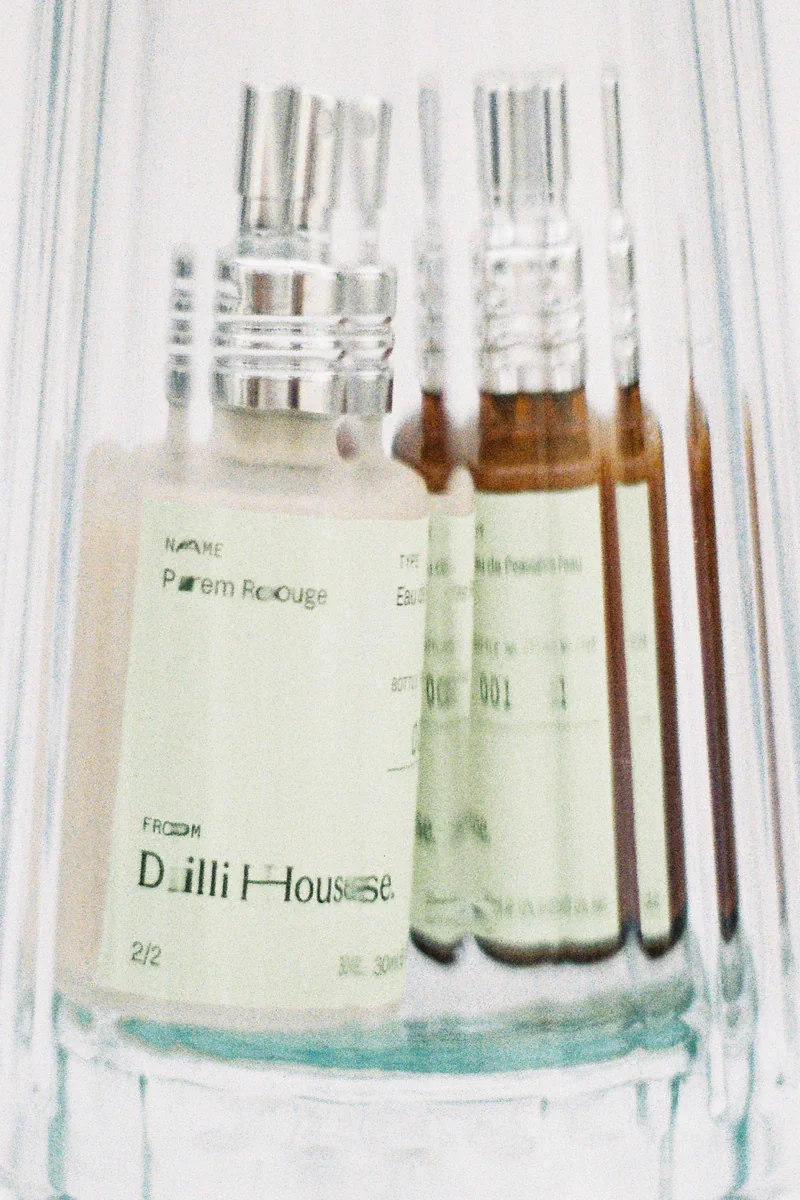
DILLI HOUSE
Our Approach to Layering
Prem Rouge has been formulated with layering in mind. This is not an afterthought or a marketing position. it is a structural feature of how the collection is composed.
The set is built around a set of what we think of as anchor materials: sandalwood, tonka bean, olive, almond and certain resins that are stable, long-lasting, and genuinely compatible with a wide range of other fragrance families. Around these anchors, the lighter expressions in the set – the greener, more citric, more floral compositions are designed to sit comfortably, rather than clash.
This means that Prem Rouge any future Dilli House fragrances can be layered successfully. But it also means the collection works well in combination with other fragrances you already own and love. The guide includes a section on integrating Dilli House pieces into an existing fragrance wardrobe, with specific suggestions for what tends to work.
A NOTE ON INGREDIENTS
Why Alcohol-Free Matters for Layering
Most mainstream fragrances are built on an alcohol base. This is practical for diffusion. Alcohol carries fragrance molecules into the air quickly, but it introduces a variable that complicates layering. Alcohol-based fragrances open dramatically on first application and then shift as the alcohol evaporates, which means the window in which you are applying a second layer is narrow and the result can be difficult to predict.
Dilli House fragrances are alcohol-free. They are carried in a base of skin-nourishing oils, which means they develop more slowly, more consistently, and more intimately with your skin. For layering purposes, this is a significant practical advantage: you have more time to work with each layer, the development is more linear and predictable, and the interactions between materials happen closer to skin temperature, which tends to produce rounder, more integrated results.
It also means that the fragrances genuinely improve with wear rather than peaking immediately. A layered blend built from alcohol-free components tends to be something you discover over hours, not seconds.
FAQ
-
Scent layering is the practice of wearing two or more fragrances together, either applied simultaneously or in sequence, to create a personalised scent that does not exist in any single bottle.
-
Yes. Scent stacking and scent layering refer to the same practice. Scent stacking has become the more common term on social platforms; scent layering tends to be used in fragrance and beauty editorial contexts.
-
Begin with two fragrances — one with a rich, stable base (a wood or resin) and one that is lighter and more volatile (a floral or citrus). Apply the heavier scent first, allow it to settle for a minute or two, and then apply the lighter one on top. Start with less than you think you need of each.
-
In theory, yes. In practice, some combinations are significantly more harmonious than others. Fragrances from the same house, or fragrances built around related base materials, tend to be easier starting points. The guide includes specific pairing suggestions.
-
Skin chemistry – including pH, moisture levels, and natural body oils – interacts with fragrance molecules in ways that are unique to each person. This is part of what makes a layered scent genuinely personal rather than simply a combination of two products.